Sellers in Palmetto Bay spend real money on staging, professional photography and the right listing price per square foot. Buyers spend their inspection period worrying about the roof, the pool equipment, maybe the age of the AC. Almost nobody on either side of the table budgets time for the tank buried somewhere in the side yard, the one that has quietly handled every flush and shower drain since the house was built.
That is a mistake in this specific Village. Palmetto Bay's defining feature as a market, the large lot with no HOA, is the same zoning decision that put thousands of homes here on private septic systems instead of county sewer. The tank is not a footnote on the disclosure form. It is the flip side of the lot size that sold the house in the first place, and state law just changed what "functioning properly" means for a lot of those systems heading into 2026.
The Trade Baked Into Every Big Lot
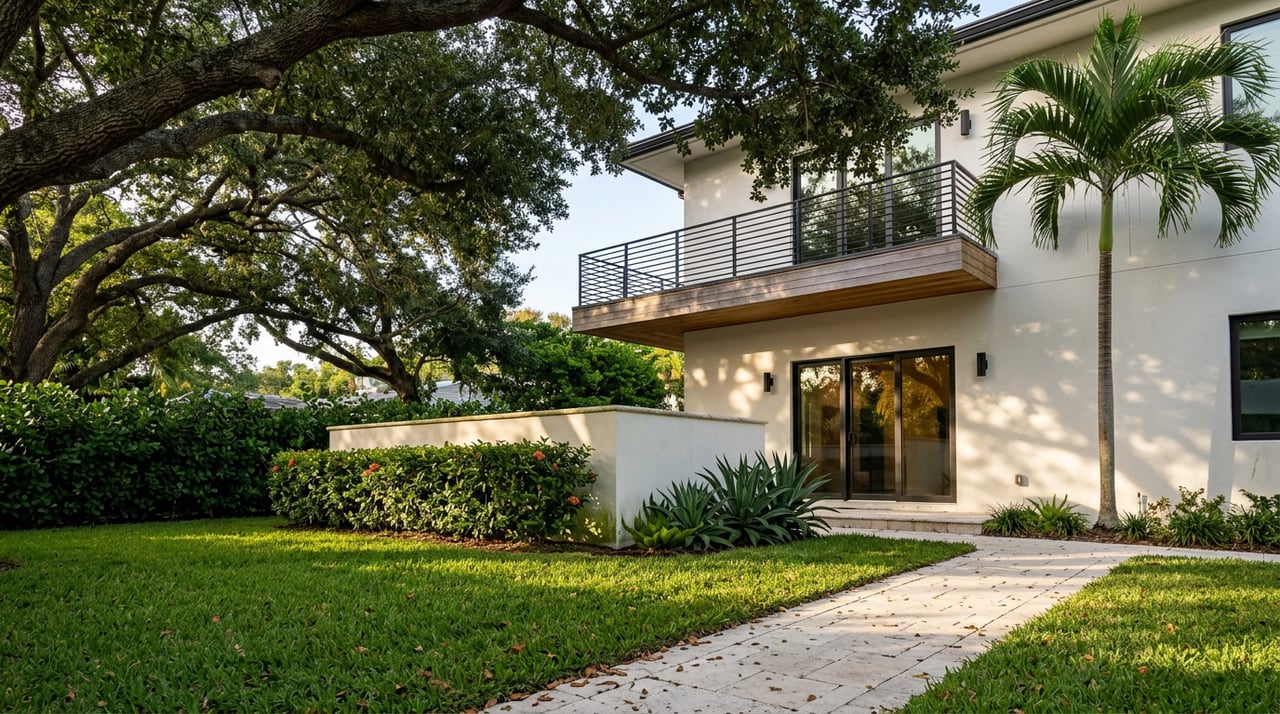
Homes in Palmetto Bay commonly sit on parcels ranging from 15,000 to 40,000 square feet, which is a large part of why families trade a shorter commute in Pinecrest or Coral Gables for more room here. Big lots need somewhere to put a drain field, and for decades that was the default answer instead of running sewer lines to every low-density street in the Village.
The result shows up in county data. A Miami-Dade vulnerability study identified Palmetto Bay as one of the municipalities with the highest concentration of septic systems in the county, on par with Pinecrest, Miami Gardens and North Miami Beach, each carrying roughly 5,000 systems. That is not a rural footnote. It is a structural feature of a market whose whole identity rests on space, privacy and low density.
South Florida's geology makes this more than a maintenance question. The region's shallow water table and porous limestone bedrock mean septic waste has less soil to filter through before reaching groundwater than it would in most of the country. The Village's own stormwater system discharges into the C-100 series of the Cutler Drain Canal, the same general hydrology septic drain fields rely on to filter properly. When groundwater rises even a little, that filtration margin shrinks.
What the Law Actually Requires You to Say
Miami-Dade County does not leave septic disclosure to a seller's judgment. Under Section 21-49.1 of the county code, any seller of property served by a septic system must provide a signed disclosure to the buyer before the purchase contract is executed, stating plainly that the land has a septic system and recommending the buyer get it inspected. The disclosure has to be attached to and recorded with the deed. This is not optional paperwork buried in a stack of addenda. It is a specific, recordable document tied to this transaction type.
Florida layers a second obligation on top of the county rule. Since the 1985 Florida Supreme Court decision in Johnson v. Davis, sellers have owed buyers a common-law duty to disclose defects that meet three conditions.
The defect materially affects the property's value, the seller actually knows about it, and it is not something a buyer could reasonably discover through their own inspection.
That duty exists independent of any contract language. A cash buyer who waives an inspection period still has the legal right to rely on what the seller knew and didn't say. Sellers who assume an as-is sale erases their disclosure obligation are working from an outdated read of Florida law.
Where the Deal Actually Stalls: Financing
The disclosure form is rarely where a Palmetto Bay contract falls apart. The stall usually happens weeks later, when the buyer's lender gets involved. FHA and VA loans typically require evidence of a functioning septic system before the loan can close, and an appraiser who spots standing water, unusual odor or lush grass patterns over the drain field can flag the file for a formal inspection before underwriting proceeds. A cash buyer can absorb a septic surprise with a price adjustment. A financed buyer, who represents the majority of activity in this price range, may not have that flexibility if the lender simply won't fund against a system in question.
This is where the cost conversation gets specific. A standard septic inspection in Florida runs roughly $250 to $900 depending on system type and how accessible the tank lids are. Full system replacement runs closer to $20,000 to $30,000, a number large enough to reshape a negotiation on a $1 million to $2 million home. If the replacement has to meet Florida's newer enhanced nutrient-reducing standard rather than a conventional system, add another $3,000 to $8,000 on top of that.
| Scope of work | Typical cost range |
|---|---|
| Standard septic inspection | $250 – $900 |
| Routine pump-out | Every 3 to 5 years, per manufacturer and county guidance |
| Riser installation for buried tank lids | $200 – $400 |
| Full conventional system replacement | $20,000 – $30,000 |
| Upgrade to enhanced nutrient-reducing system (ENR-OSTDS) | Add $3,000 – $8,000 to conventional cost |
The State Just Tightened the Rules
Florida's 2023 House Bill 1379 requires new septic permits in designated "impacted areas" to install enhanced nutrient-reducing systems instead of conventional ones, and it sets a phased timeline that eventually reaches existing systems, not just new construction, requiring them to either connect to sewer where available or upgrade by 2030. A follow-up bill in 2025, HB 645, streamlined the permitting path for property owners making that conversion, which matters for anyone trying to sell an older system before the deadline pressure builds.
What this means for a Palmetto Bay seller depends on whether a given parcel falls inside one of the state's designated impacted zones, which is determined through the Florida Department of Environmental Protection's mapping tool, not by neighborhood name. Two homes on the same street can land on opposite sides of that line. This is exactly the kind of detail that separates a smooth listing from one that stalls in the eleventh hour.
What This Means If You're Selling
Get ahead of the buyer's inspector rather than reacting to their report. Schedule a licensed septic inspection two to four weeks before listing, not after an offer is in hand. Locate and expose your tank lids before showings start, since a buried lid that an inspector can't access without digging is one of the most common reasons a septic report comes back inconclusive and buyers get nervous. Pull your property's permit file from the county health department so you have the original installation permit and any repair history ready to hand a buyer's inspector. If a cracked baffle or minor repair turns up, fixing it for a few hundred dollars before listing is a far better outcome than having it surface during a buyer's inspection, where the same fix can become a renegotiation point worth thousands.
What This Means If You're Buying
Never skip the septic inspection to speed up a cash close, even when the seller's disclosure looks clean. The disclosure only covers what the seller knew, not what a licensed inspector would find by opening the tank and measuring sludge levels. Ask specifically for the last three pumping receipts, since consistent maintenance on that schedule is the clearest sign of a well-kept system. If you're financing with FHA or VA, factor the possibility of a required septic inspection into your timeline from the start rather than discovering it mid-underwriting. And if the home you're considering falls within one of the state's impacted areas, ask what that means for the system's remaining useful life before you get attached to the property.
A Short FAQ
Does every Palmetto Bay home have septic? No. Many properties are on county sewer. The Village simply has one of the higher concentrations of septic systems of any municipality in Miami-Dade, largely due to its large-lot zoning.
Can I skip the septic disclosure if my buyer is paying cash? No. The Miami-Dade disclosure requirement and the Johnson v. Davis duty both apply regardless of financing type.
How do I find out if my property is in one of the state's ENR impacted areas? Check the Florida Department of Environmental Protection's mapping tool for the Basin Management Action Plan program, since designation is determined by the specific parcel, not by neighborhood boundaries.
What if my septic and stormwater questions overlap with irrigation rules? Palmetto Bay residents are also responsible for maintaining the swales adjacent to their property and for following the county's water conservation schedule, which is one more reason local guidance matters more than a generic checklist.
A big lot in Palmetto Bay is a genuine asset. It is also a system you are responsible for, one that state and county rules are actively reshaping right now. If you're weighing a sale and want a clear read on where your specific property stands before a buyer's lender asks the same question, Randi Connell can walk you through it before it becomes a problem instead of after.